Finding the right young talent in a short period of time has always been a challenge for tech leads, managers, and recruiters, even for internships. Each summer semester brought the same dilemma: how to identify and match capable students with the right practical training opportunities—quickly, fairly, and efficiently. With a flood of applications and clunky Excel spreadsheets, the process was manual, slow, and often frustrating for everyone involved.
Many companies in Iași, a city with a vibrant academic community, face similar struggles when trying to recruit interns. But Levi9 decided it was time for a smarter, more scalable solution.
That’s when Codrin Baleanu, Engineering Lead at Levi9, stepped in to lead the development of a platform that would automate the student-company matching process, simplify administrative tasks, and foster stronger connections between the academic world and the tech industry. Piloted in partnership with a local technical faculty, the solution reimagines how students and companies engage.
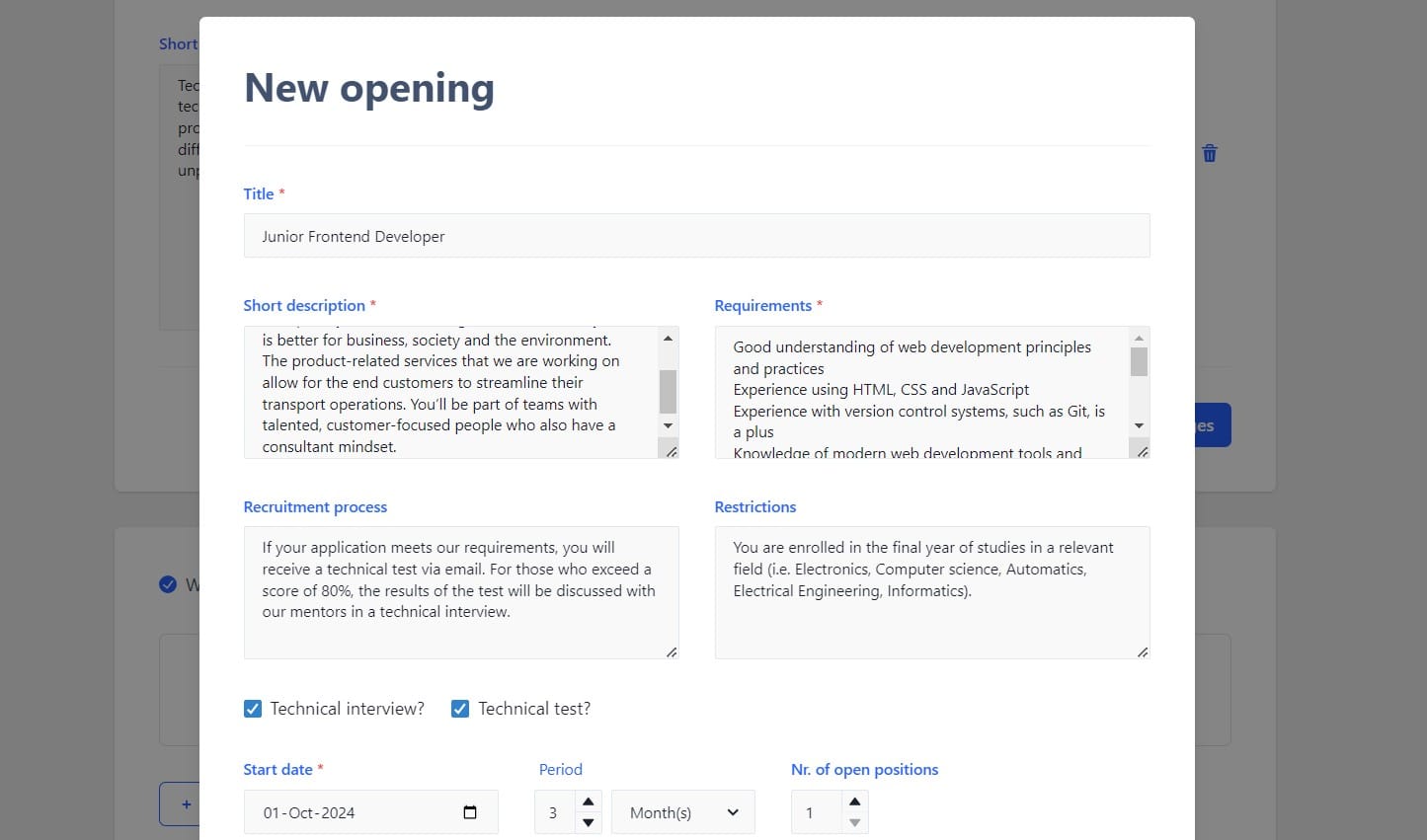
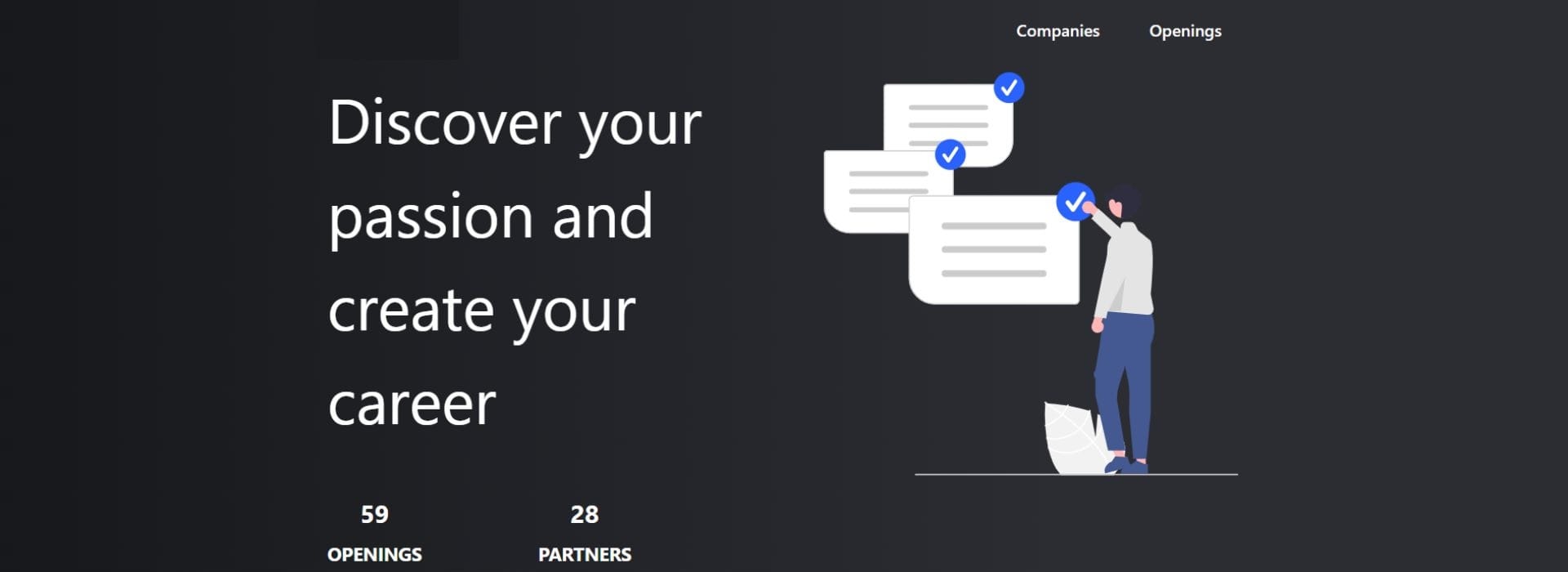
Companies can easily list open positions on the platform, and students can browse and apply for opportunities that match their skills and career goals. No more spreadsheets or confusing email chains. The system facilitates smooth communication, automates administrative tasks, and provides real-time updates for both sides.
Connecting companies and education
“We knew there had to be a better way,” Codrin says, reflecting on the early days of the project. The platform, now waiting to be used for the upcoming practice placements in 2025, is designed with both usability and scalability in mind.
“It’s all about making connections easier and more effective,” explains Adina Chirilă, Levi9 Front End Developer. Companies can use the platform’s user-friendly interface to post internship opportunities with detailed descriptions, requirements, and timelines.
On the admin side, faculty representatives can add companies to the system. “When a company is added, a unique link is generated, which the admin can then share with the company representative,” details Adina. This process ensures that only vetted companies have access to the platform.
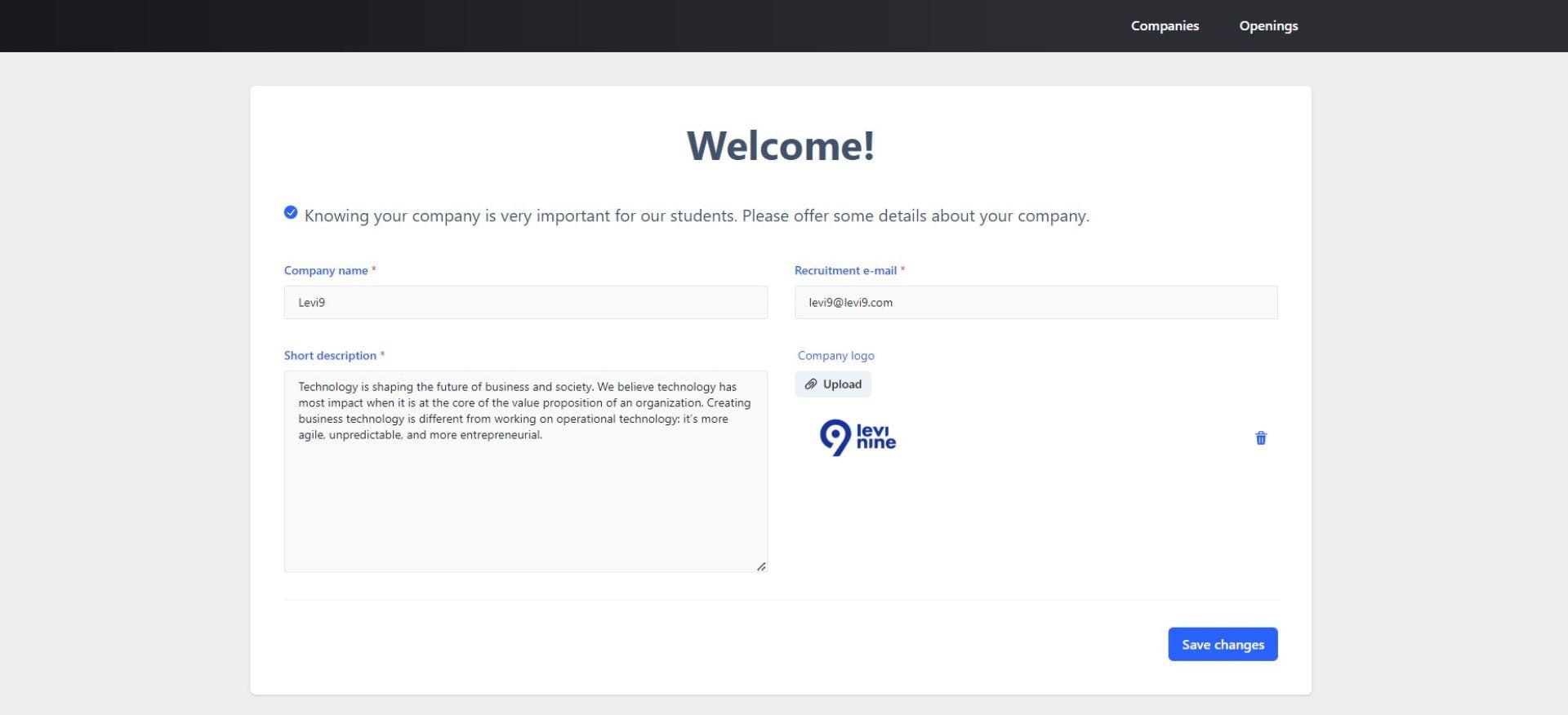
“Once companies have access,” Adina continues, “they can customize their profile with important details like recruitment email, company description, and logo. They can also post job opportunities, specifying requirements, recruitment process details, and any restrictions, such as whether the position is open to final-year students only.”
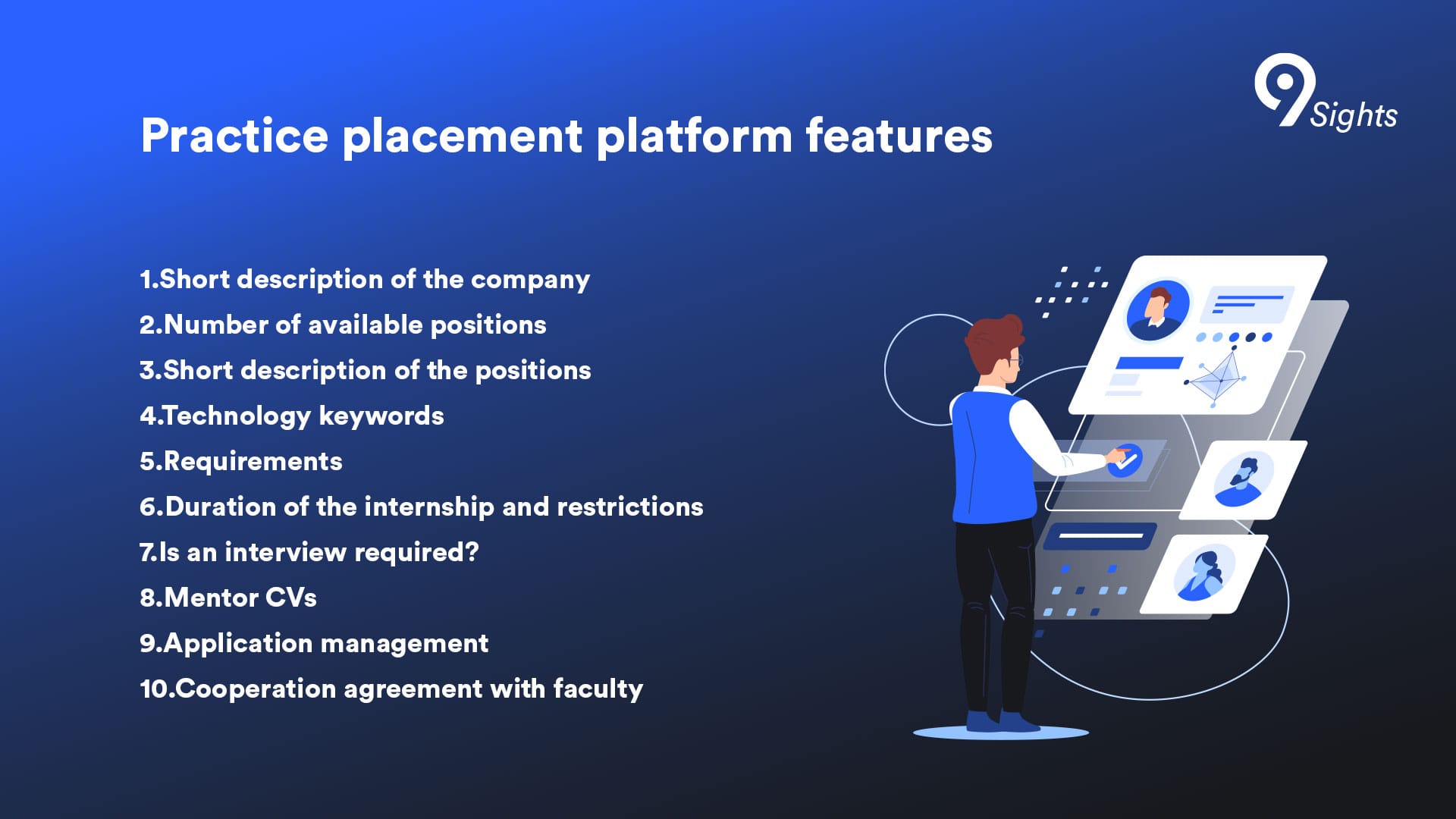
Companies can also indicate whether the recruitment process includes technical interviews or tests. They can specify start dates, duration in weeks or months, and the number of available positions. There’s even a feature to add keywords representing the position, which helps with searchability.
Students navigate offers with ease
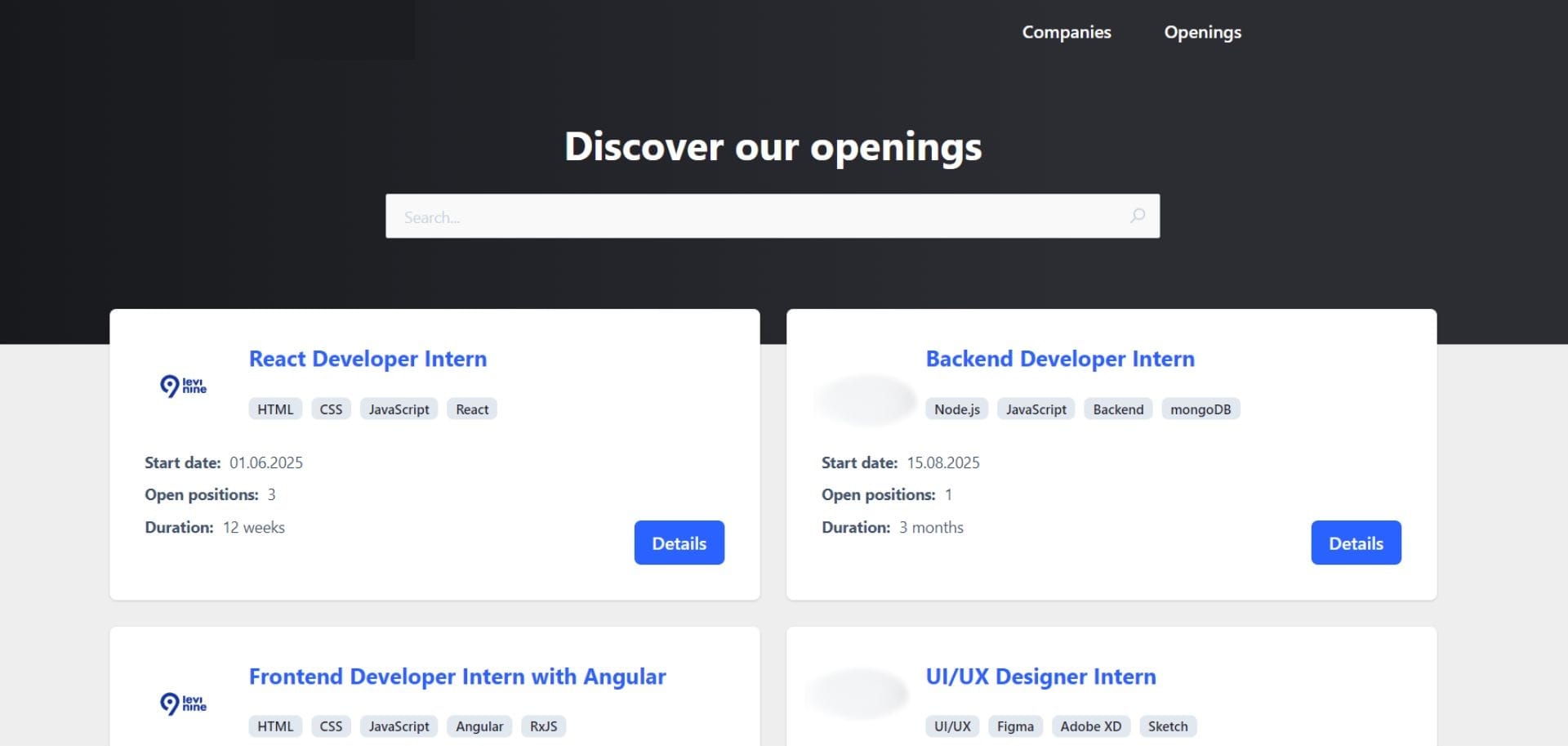
On the other side, students have the ability to filter through these opportunities based on their skills, interests, and availability. “Each job posting is presented as a card with key details at a glance: company name, keywords, start date, number of positions, and internship duration. Clicking on a card reveals full details, including application steps,” explains Adina.
On top of that, the platform features a thoughtful choice: it provides information about the mentors or trainers for each position. “In many internship programs, you never know who will be the person guiding you. This adds a lot of value to these announcements—to know the mentor you might work with,” says Codrin.
The platform uses a tech stack that includes React and TypeScript for a dynamic frontend, React Router for navigation, and Formik with Yup for streamlined form handling. The Chakra UI improves the design, while Kotlin and MariaDB provide a solid backend.
Growing talents for society
“It’s a tradition at Levi9,” explains Codrin, who has transformed Levi9’s internship offer into a full-fledged strategic program called Dev9. “Internships at Levi9 are more than just learning experiences; they’re opportunities to make a real impact,” Codrin says proudly. “We see our interns as future colleagues, and we involve them in meaningful projects right from the start.”
Levi9’s internship program is designed to give young talents a taste of real-world applications of their knowledge. “We support and guide them, but we also hope that they step up and contribute,” Codrin continues. “That’s how we prepare them not just for a career at Levi9, but for a career in tech anywhere.”
Mădălina’s developer journey is the perfect illustration of Levi9’s approach to mentorship. Right after completing the Dev9 internship, she immediately began contributing to a significant project, joining a six-person team to build a platform that helps other young people gain practical experience while still students.
This process of learning and giving back is at the heart of Levi9’s mission: to empower its staff to contribute to society from the start, mirroring one of the most important values of the company. “We’re not just creating software; we’re building a community,” Codrin says. “And that’s something we’re incredibly proud of.”