Testing before a release used to answer a simple question: can we make this run without crashes? But a tester’s job has since changed dramatically. Testers now need to ask questions like: Can we ensure a smooth user experience? Are we secure? Can we scale? Does the new release reflect the broader business goals?
AI testing tools now promise to replace entire testing teams with just one click. But Levi9 test leaders like Valentina Țurcanu and Victor Munteanu don’t see testers disappearing any time soon. On the contrary, the job is expanding to include new meaning and higher responsibilities. Testers are becoming “quality evangelists”, as Valentina calls them, with the ability to deeply understand the product’s philosophy and the knowledge to drive system architecture decisions that can result in a resilient product.
From bug hunters to testing science
“Testing is a science and has existed throughout history”, says Victor. “Not only in IT but also in manufacturing, food, and even in the construction of robots. In the software industry, testing was initially led by developers, but the need for quality and reliability arose, and it became a discipline itself governed by a set of rules, methods, and foremost, creativity. “We started from something very basic in the 50s and 60s,” explains Valentina. “Back then, there were no testers. Debugging meant developers alone tried to pinpoint and fix errors.
As software became more complex, testing also evolved. “This brought us to structured testing, and quality assurance in the 1980s.” The V-Model was the first to include testing in all software development stages. The introduction of the concept of microservices further complicated the process, Valentina explains.
“It used to be that 10 years ago it was enough to know a testing tool and click”, says Victor. Then, professionals began to theorize and formalize testing, leading to structured methodologies that established the tester role as a profession in its own right.
Tools are not a silver bullet
Test automation had its spotlight for a few years. “Most companies don’t understand what automation testing means,” claims Victor. In their view, automated testing eliminates the need to test because it can be relied on 100%. But they couldn’t be more wrong. Automation, he argues, is only as effective as the scope and design of the tests themselves. “Behind those automated tests are well-defined parameters outlining what exactly is being tested.” And for that, we need humans.
Victor emphasizes that automation is not a silver bullet but “a much more intricate process.” And this applies to artificial intelligence tools as well.
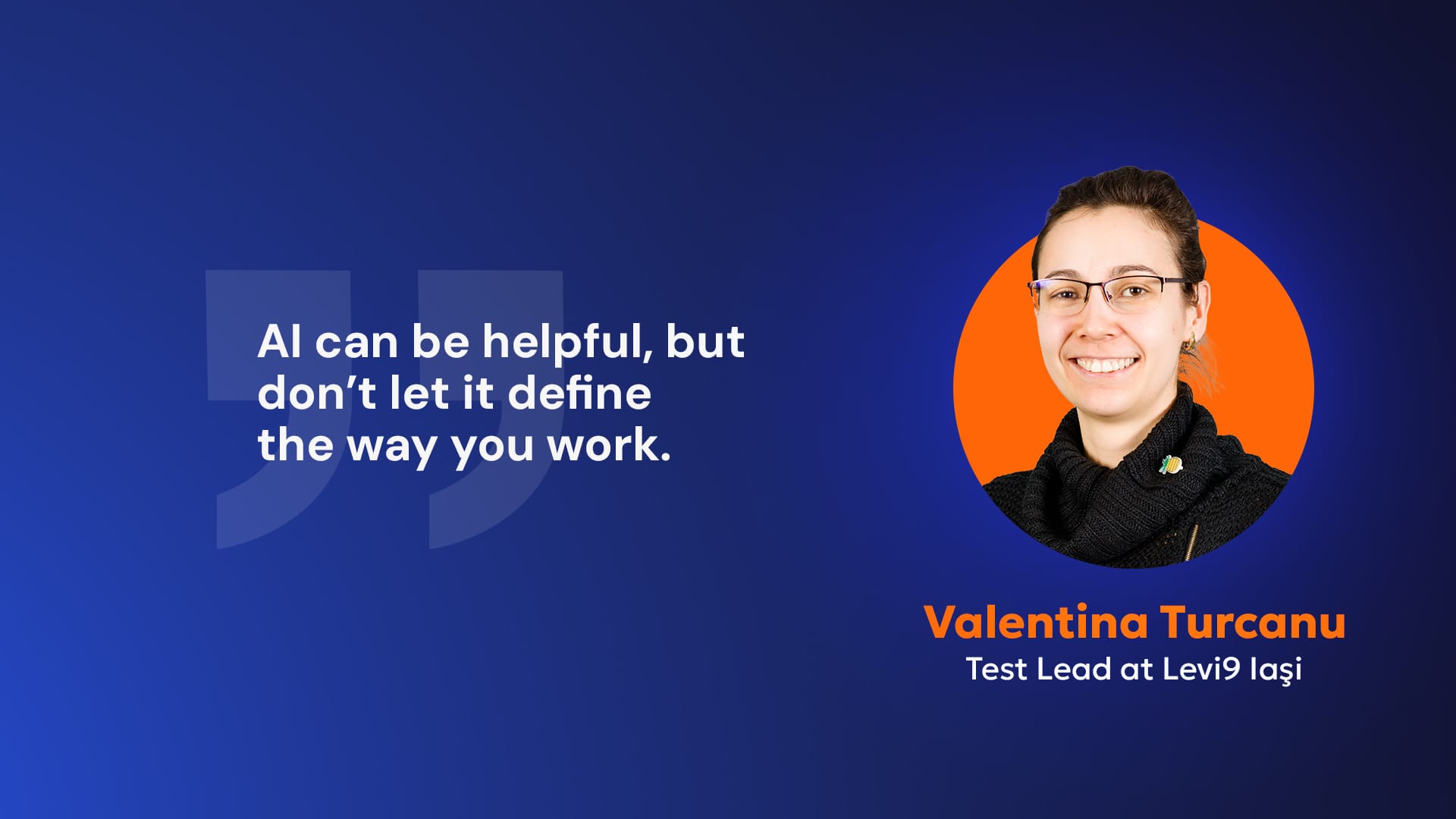
“There’s a lot of hype around AI, but not all of it delivers. Right now, AI is full of gaps,” Victor explains. “The more you use it, the more you realize it’s not perfect yet. But the earlier we start experimenting with these tools, the better prepared we’ll be when they actually get refined.” Valentina believes AI can be helpful, especially with simple tasks, and that testers should embrace it where it fits with their work. “But don’t let it define the way you work,” she warns.
The quality evangelists
Valentina views testing as a much more complex role than the name suggests, centered around quality assurance. She sees testers as “quality evangelists.” The modern quality engineer focuses not only on monitoring metrics but also on interpreting them and extracting actionable insights. “Quality assurance engineers need to think about how to measure quality, what to monitor, and what actions to take when metrics aren’t met,” Valentina says.
The QA engineers should also understand the business and how services work together. They often have the ability to step out of the bubble and evaluate the broader business impact, see how different parts of the process interact, and flag potential risks or impacts on other teams.
From reactive, testers have morphed into pro-active QA engineers that contribute to architectural decisions, deployment processes and post-release analysis and follow-ups. “The trend is moving toward doing testing even before development, if possible,” jokes Victor.
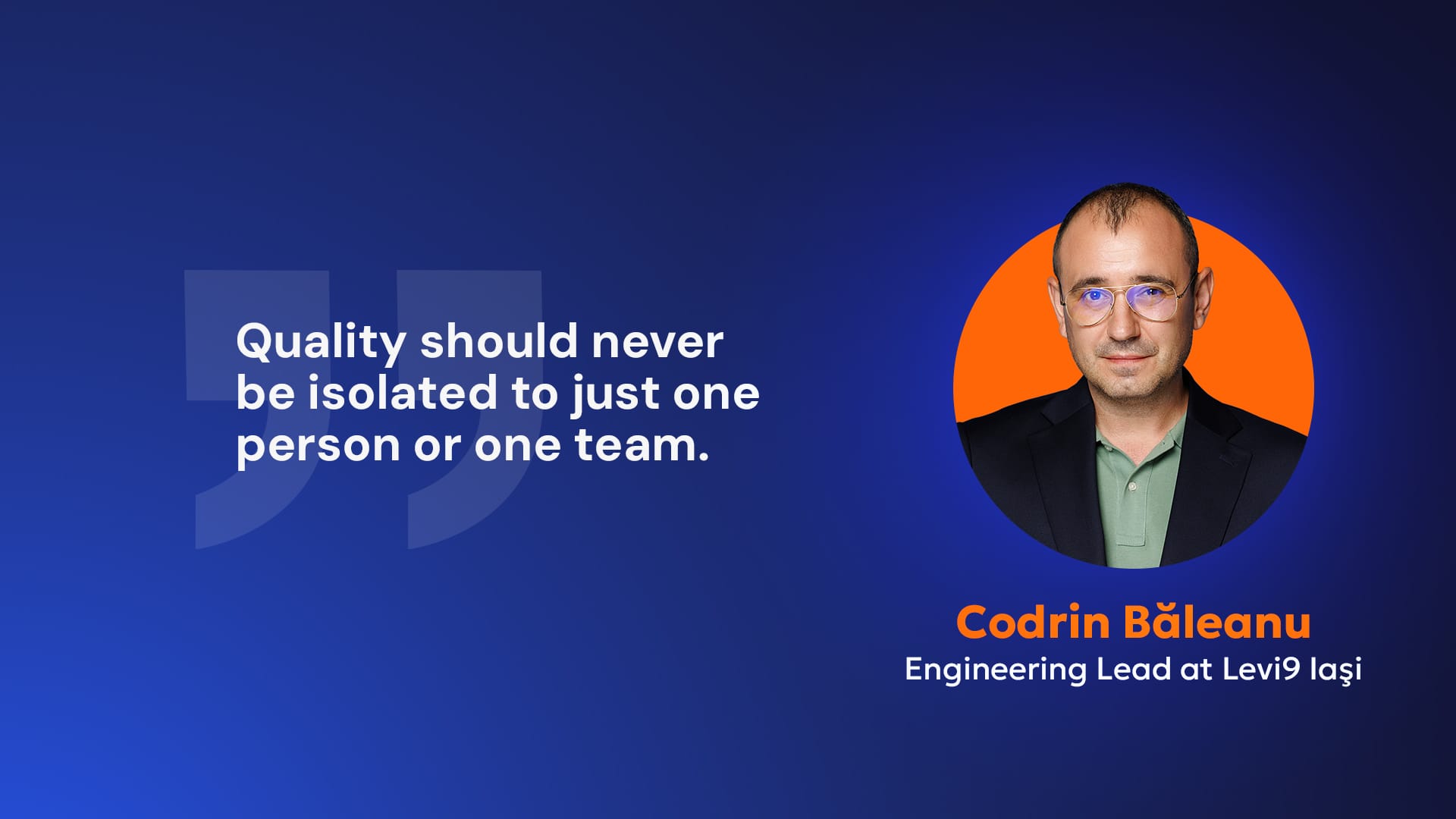
While QA engineers have “quality” in their job title, Codrin Băleanu, Levi9 Engineering Lead, stresses that “quality should never be isolated to just one person or one team. It’s not healthy for developers to write code, hand it off to testers, and disengage.” Instead, he advocates for shared responsibility. Everyone, from developers to testers, should contribute to a unified vision of quality. “QA is the ownership of everyone.”
The T-shaped Tester
Codrin sees the tester job evolving into what he calls T-shaped engineer, where a person would have in-depth knowledge of testing but also broad knowledge of coding, deployment, or even business.
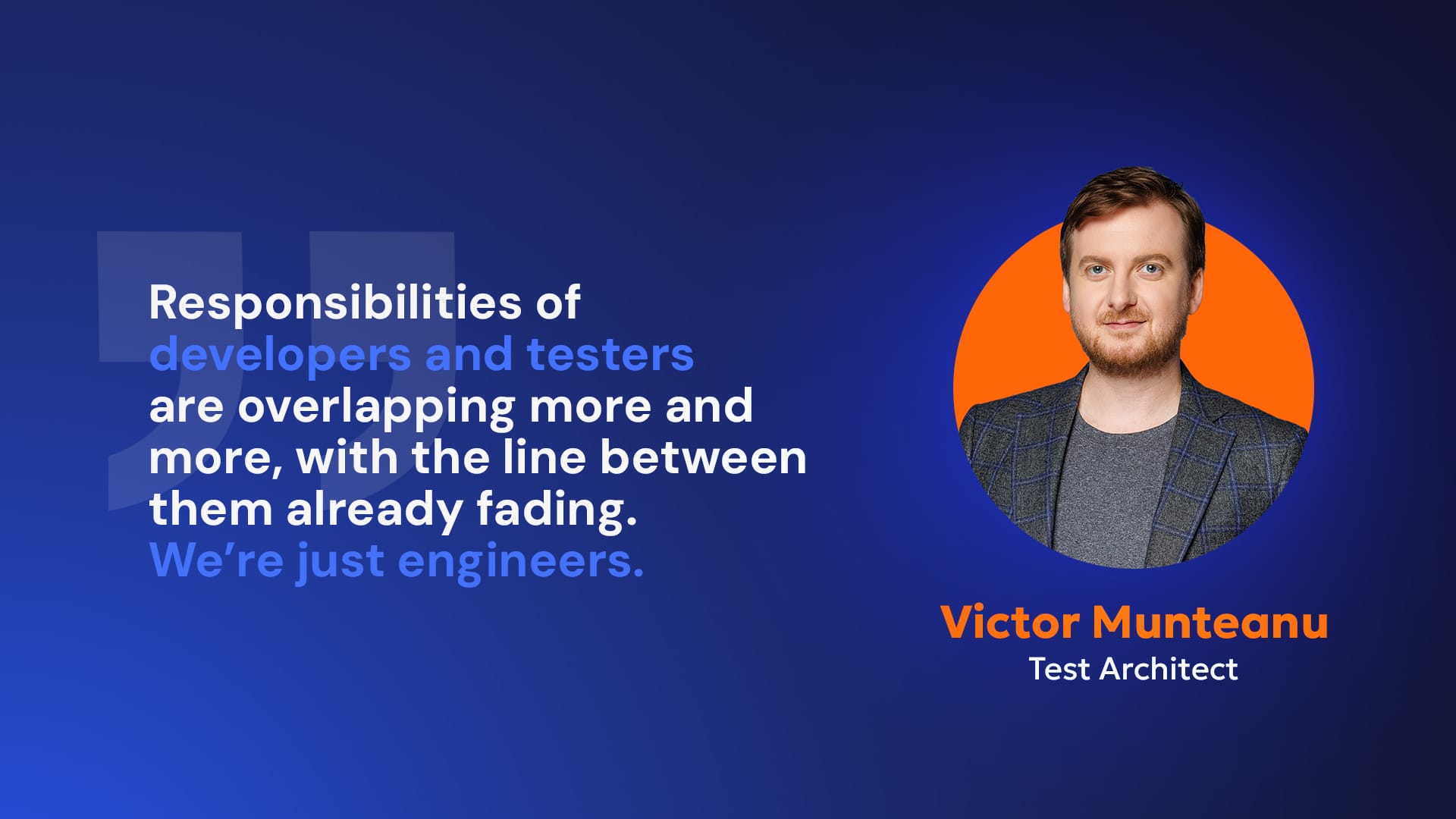
In this view, testing isn’t just about running tests. It’s about understanding how the architecture works, deploying systems, and identifying potential issues before they become big problems. “It’s no longer a black box for the developer to wonder what the tester does; they’re directly involved. Responsibilities are overlapping more and more, and in my opinion, the line has already disappeared. We’re just engineers,” says Victor.
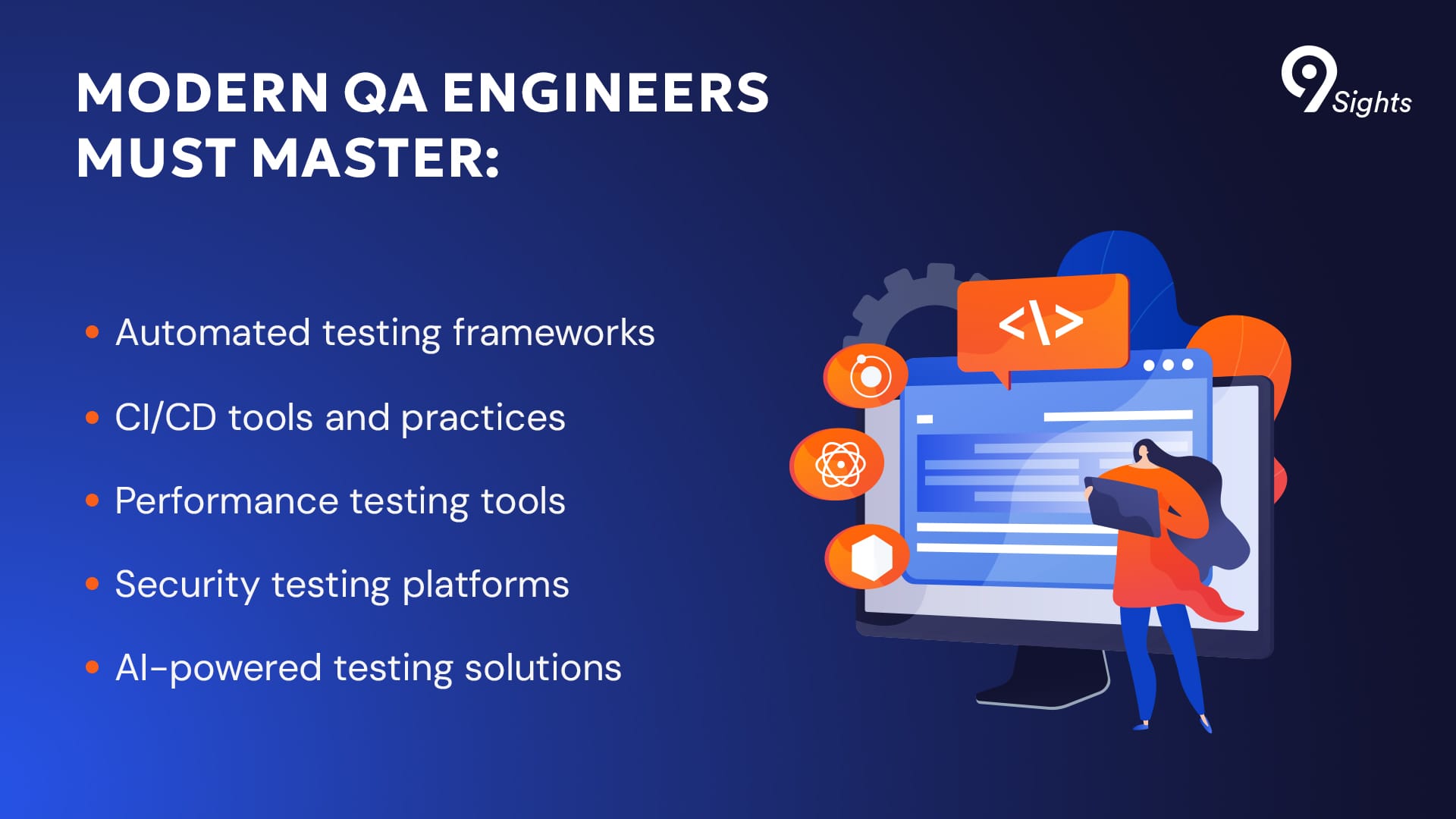
“Testing is just a small part of what we do now,” confirms Valentina. “Quality assurance engineering is about the whole process,” she says. This means diving deeper into areas like security testing, performance metrics, and even AI. For example, as cyberattacks become more common, QA engineers can specialise in security testing and contribute to more resilient products.“AI won’t do it for us. We need to do it ourselves.”
A small step towards Business Analyst
Another exciting direction for QA professionals is stepping into business analyst (BA) shoes. “If you already understand the business side of your project, such as financials, performance, and the reasons behind certain practices, you’re halfway there,” Codrin explains. This transition makes natural sense, as QA professionals already act as a bridge between technical and user perspectives. Victor sees this as a potential evolution because QA engineers understand what the client really wants and how features connect to their goals, so they can shape the whole product.” However, the role goes beyond traditional requirement gathering, as Valentina points out. “A BA thinks about the impact of changes on the business and works closely with stakeholders to figure out what’s possible and what’s not.”
For those interested in this path, Codrin suggests starting small: “Begin with requirement analysis or business process modeling. From there, you can build on your knowledge: understand regulations, explore market trends, or even give input on high-level business decisions.”
From finding bugs to setting clear frameworks, from preaching quality to influencing architecture decisions, from T-shaped engineers to being great business analysts – it’s clear that the tester job is evolving instead of disappearing. What stays the same, summarizes Codrin, is the attitude and willingness to learn. “If you have the right mindset, we can make it work,” he says.
In this article: